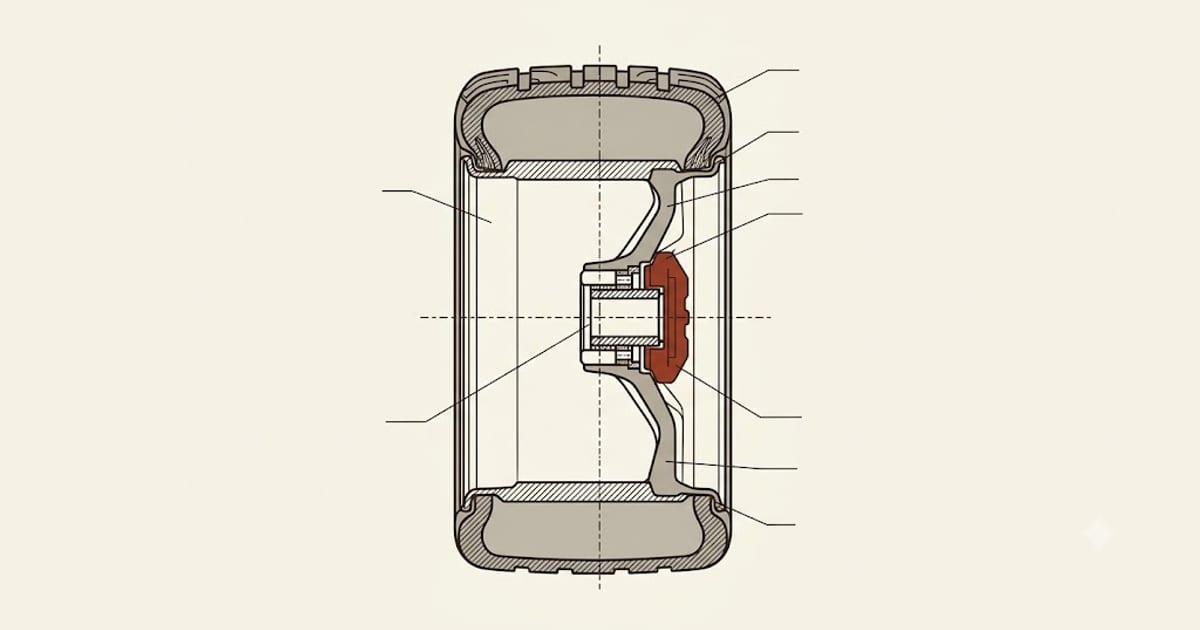
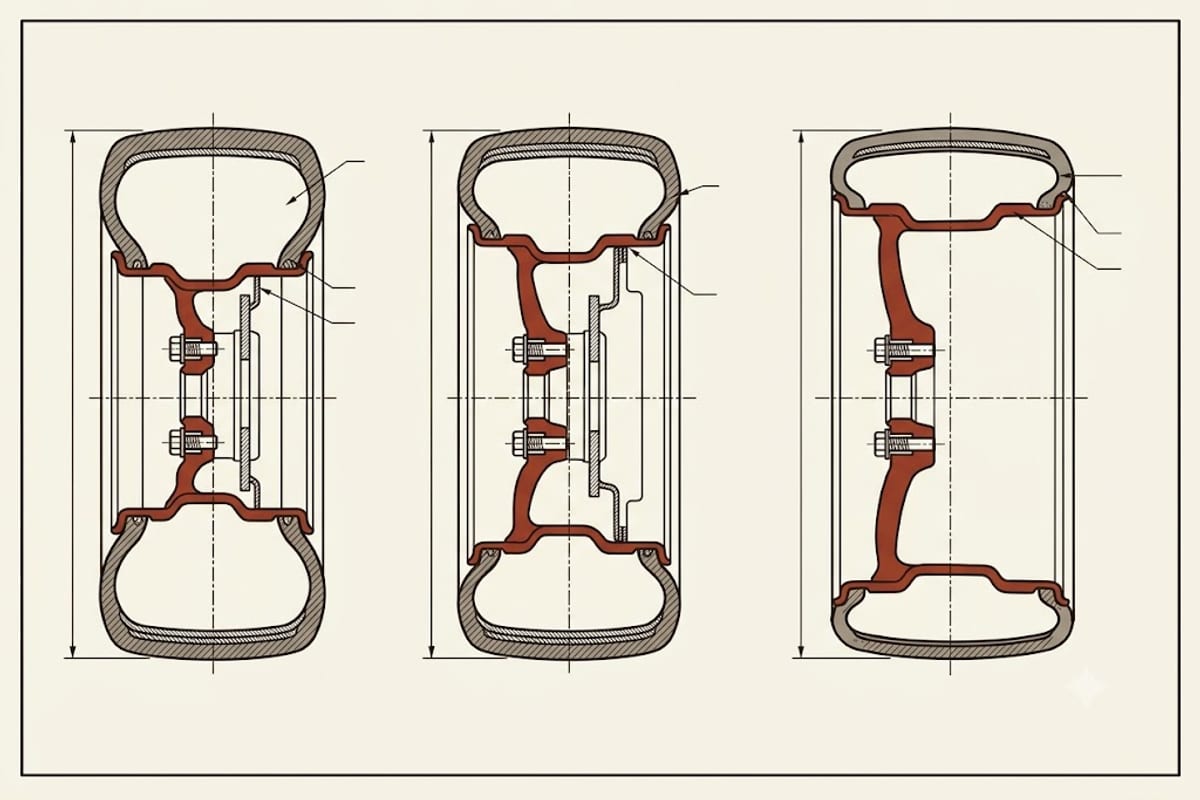
Plus sizing means fitting a larger wheel with a shorter, wider tire, keeping the overall rolling diameter the same.
Diameter is what everything on the vehicle depends on — speedometer, odometer, ABS, stability control, transmission shift points, gearing. Hold it constant and none of them notice the change. That constraint is the whole discipline.
Worked examples
| Original | Plus 1 | Plus 2 |
|---|---|---|
| 195/65R15 | 205/55R16 | 215/45R17 |
| 205/55R16 | 225/45R17 | 225/40R18 |
| 215/60R16 | 225/50R17 | 245/40R18 |
| 225/65R17 | 245/50R18 | 255/45R19 |
The pattern: each inch of wheel diameter adds roughly 10–20 mm of section width and subtracts 5–10 points of aspect ratio.
That is not arbitrary. An inch of wheel diameter adds half an inch of radius, so the sidewall must lose half an inch of height. Since aspect ratio is a percentage of section width, a wider tire needs a proportionally smaller percentage to lose the same absolute height.
Stay inside 3%
Overall diameter should land within about 3% of the original. Inside that band, speedometer error stays within normal tolerances and the electronic systems reading wheel speed behave as designed.
Calculate before buying rather than trusting a chart written for a different vehicle:
diameter (in) = (section width × aspect ÷ 100 × 2 ÷ 25.4) + wheel diameter
For 225/45R17: (225 × 0.45 × 2 ÷ 25.4) + 17 = 7.97 + 17 = 24.97 in. For the 205/55R16 it replaces: (205 × 0.55 × 2 ÷ 25.4) + 16 = 8.88 + 16 = 24.88 in.
A difference of 0.4%. That is a correct plus size.
What you gain
Steering response. A shorter sidewall flexes less, so the tire reacts to steering input more directly. This is the real reason plus sizing exists, and it is noticeable.
Contact patch. A wider tire has more rubber on the road, which generally improves dry grip.
Appearance. More wheel, less sidewall. Honest to say this is why most plus sizing happens.
What it costs
Ride quality. The sidewall is a spring, and you have just made it stiffer. Every plus step firms up the ride and transmits more road texture into the cabin. Plus 2 on a comfort-oriented car is a real change, not a subtle one.
Wheel damage. Less sidewall means less to absorb a pothole. Bent rims are far more common on 19- and 20-inch wheels than on 16s, and the repair is expensive.
Cost. Low-profile tires in large sizes cost meaningfully more, and there are fewer choices.
Weight. A larger wheel is usually heavier, and it is unsprung rotating mass — the kind that hurts both ride and acceleration.
Wet grip. A wider tire displaces more water, so aquaplaning resistance can worsen, depending on tread design.
Also check clearance and load
A wider tire needs room at full steering lock, exactly as covered in will 33s fit — the mechanism is identical even though the vehicle is not.
And check the load index on the new size. It must not fall below the door placard, which is easy to breach when moving to a low-profile size in a performance range. See the load index chart.
FAQ
What does Plus 1 sizing mean?
A wheel one inch larger in diameter with a shorter, usually wider tire, keeping the overall rolling diameter the same.
How much can tire diameter change safely?
About 3%. Beyond that the speedometer error and the systems reading wheel speed start behaving outside their design assumptions.
Does plus sizing affect the speedometer?
Done correctly, no — that is the point of holding overall diameter constant. Done incorrectly, it changes the reading by the diameter error.
Does plus sizing ruin ride quality?
It firms it up. The sidewall acts as a spring, and a shorter one is stiffer. Plus 1 is usually acceptable; Plus 2 is a noticeable change on a comfort-oriented car.
Are bigger wheels more likely to be damaged?
Yes. Less sidewall means less cushion against potholes, and bent rims are much more common on large-diameter wheels.