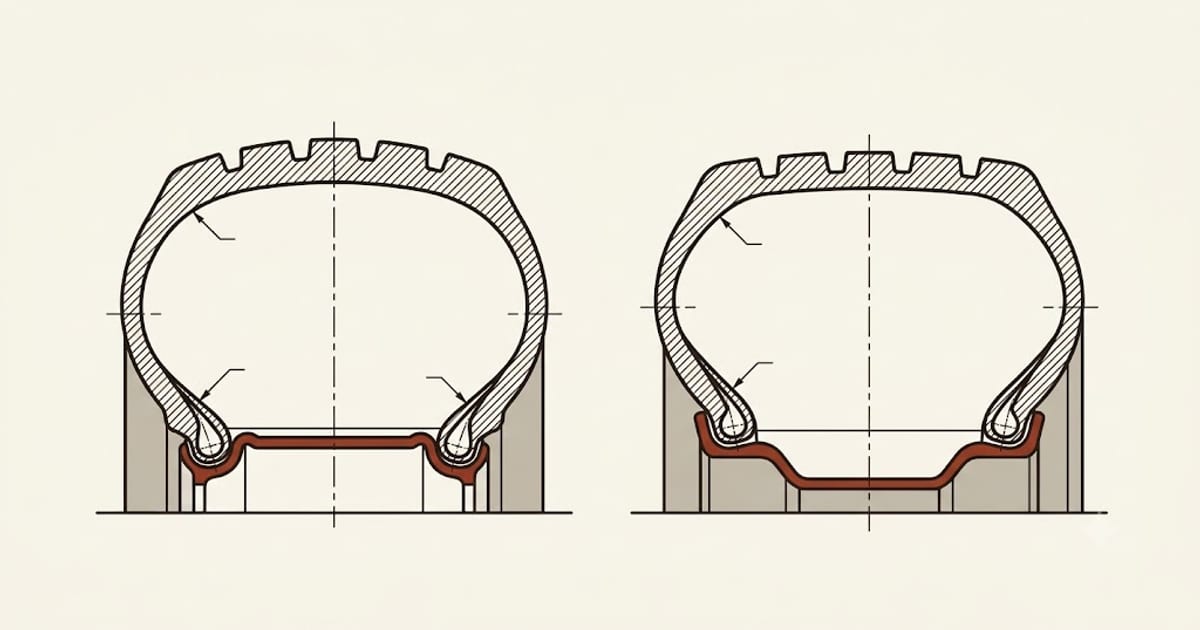
A tire size is not matched to one rim width but to a range, typically 1.5 to 2.0 inches wide.
| Section width | Approved rim range | Measuring rim |
|---|---|---|
| 195 mm | 5.5–7.0 in | 6.0 in |
| 205 mm | 5.5–7.5 in | 6.5 in |
| 215 mm | 6.0–8.0 in | 7.0 in |
| 225 mm | 6.0–8.5 in | 7.0 in |
| 235 mm | 6.5–8.5 in | 7.5 in |
| 245 mm | 7.0–9.0 in | 8.0 in |
| 255 mm | 7.0–9.5 in | 8.5 in |
Section width is quoted on the measuring rim
The 225 in a size code is the section width when mounted on the measuring rim and inflated to a standard pressure. On any other rim it is different.
Rule of thumb: section width changes about 5 mm (0.2 in) per half-inch of rim width. A 225 tire on an 8.5 in rim measures nearer 235; on a 6 in rim, nearer 215.
That matters for clearance, because section width is measured at the sidewall bulge — the widest part of the tire and the part that hits things.
Too narrow a rim: crowning
The bead is pulled inward, the tread arches, and the centre of the tread carries more load than the shoulders.
Consequences: centre wear, reduced grip at the edges under cornering, and a vague feel because the sidewall sits at an angle rather than running straight down from the bead.
Too wide a rim: stretch
The tread is pulled flat and the sidewall is pulled outward, sitting at an angle from bead to tread.
Consequences: the bead is more likely to unseat under hard cornering or at low pressure, the rim lip is exposed to kerb and pothole damage, and the sidewall loses much of its compliance because it is already under tension.
Extreme stretch, done for appearance, moves the tire outside the manufacturer's approval entirely, and with it any warranty.
Where in the range to sit
Middle of the range is right for almost everyone: the tire performs as it was designed and tested.
Toward the wide end gives a slightly stiffer, more responsive feel and a marginally wider contact patch. Common on performance setups.
Toward the narrow end gives a little more sidewall compliance and a marginally taller tire. Common on winter setups, where a narrower rim with a narrower tire cuts through snow better.
Wheel offset is a separate question
Rim width sets how wide the tire is. Offset sets where that width sits relative to the hub, and it decides inner and outer clearance.
A wider rim with the same offset pushes the tire outward and inward by equal amounts, and both directions have to be checked — at full lock and full compression, not standing still.