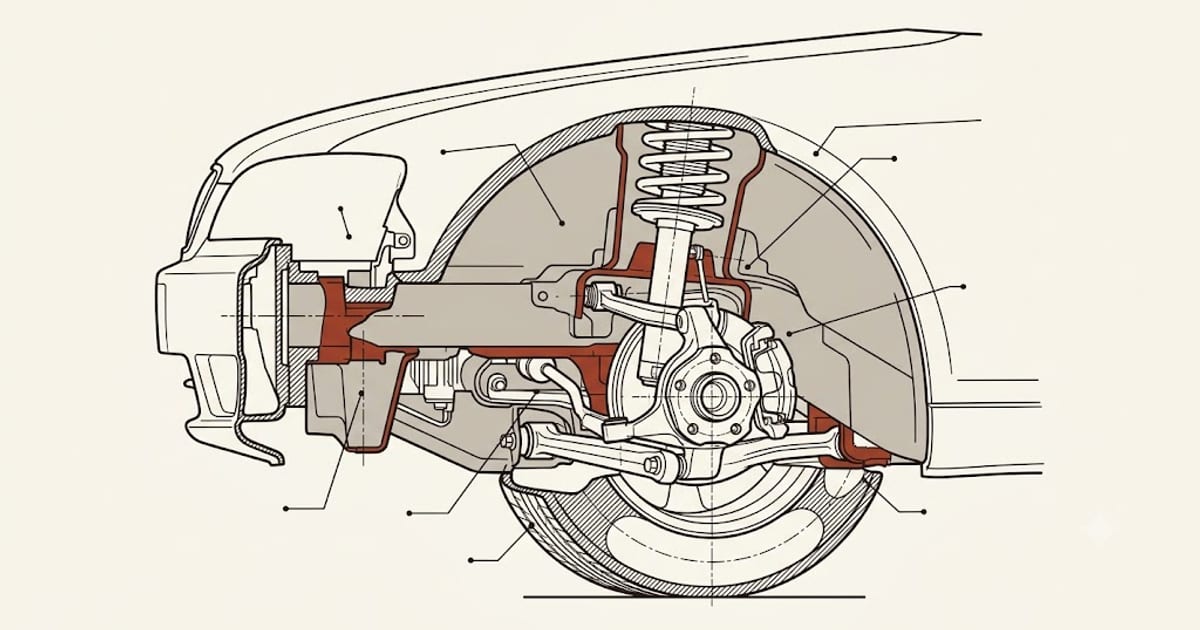
Fitment is five separate questions. A tire can pass four and fail the fifth.
1. Rim width range
Every tire size has an approved rim width range, typically 1.5 to 2 inches wide. A 225-section tire is generally approved for 6.0 to 8.5 inch rims.
Mount it narrower than the range and the tread crowns — the centre wears and grip falls off at the edges. Wider, and the sidewall is stretched, which hurts the bead seal and makes pinch flats more likely.
The manufacturer publishes a measuring rim too. Section width is quoted on that rim, and changes about 0.2 inches per half-inch of rim width away from it.
2. Load index
The number after the size. It must meet or exceed the vehicle placard, without exception.
This is the check most often skipped when moving from a passenger tire to a similar-looking one, and it is the one with the clearest consequence. Load index 94 is 1,477 lb per tire; 91 is 1,356. On a loaded vehicle that difference is real.
Light-truck tires with the same nominal size carry more and ride harder. Check the placard, not the old tire — the old tire may itself have been wrong.
3. Speed rating
Also on the sidewall, after the load index. Lowering it is a warranty and insurance question in some jurisdictions and a heat question everywhere: speed ratings describe sustained heat tolerance, not just top speed.
Mixing ratings across an axle is bad practice; the axle takes the lower rating.
4. Rolling diameter
Within ±3% of the original, or the speedometer, odometer, ABS and transmission shift points all read off. Beyond 5%, recalibrate.
5. Physical clearance — the one that catches people
This is where fitment actually fails, and it fails at full steering lock and full suspension compression, not in the driveway.
Things to check:
- Inner clearance at the strut, spring perch and suspension arms
- Outer clearance at the fender lip, particularly at the front on a turn
- Section width is not tread width. The 225 is the widest point of the sidewall. Clearance problems appear there.
- Wheel offset and backspacing move the whole assembly inward or outward and change both clearances at once. A wider tire on a lower-offset wheel is two changes, not one.
Load the vehicle, turn the wheel lock to lock, and look. Rubbing that only happens with four people and luggage is still rubbing.
Staggered and mismatched setups
Some vehicles specify different sizes front and rear. Fitting a square setup to a staggered car, or vice versa, affects handling balance and on all-wheel-drive vehicles can damage the drivetrain — the centre differential sees a permanent speed difference it was never meant to absorb.