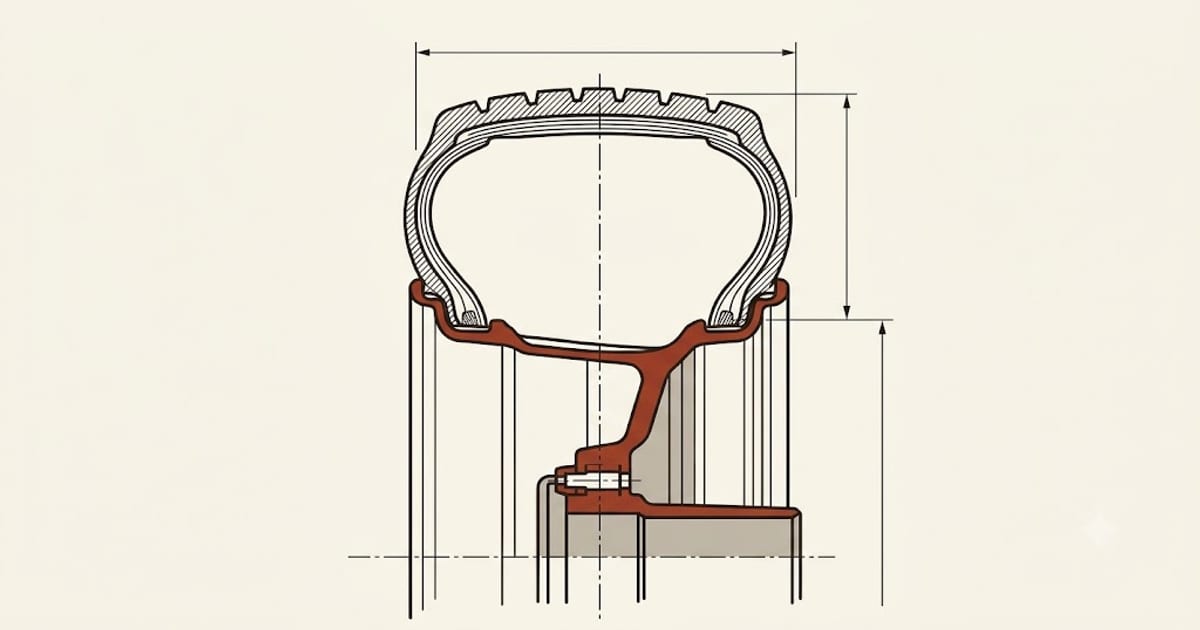
The numbers on a tire sidewall — 265/70R17 — look like three measurements. They are not. The first is a measurement, the second is a percentage of the first, and the third is a measurement of a different object entirely. Once you know that, the conversion to inches is arithmetic you can do in your head, and a whole class of fitment mistakes stops being mysterious.
What each number means
265 — section width in millimetres, measured at the widest point of the sidewall, not at the tread.
70 — aspect ratio. The sidewall height is 70 % of the section width. So this sidewall is 265 × 0.70 = 185.5 mm tall.
R — radial construction.
17 — the wheel diameter in inches. The one imperial number in a metric string, which is exactly why the conversion trips people up.
The conversion
Overall diameter is the wheel plus a sidewall at the top and another at the bottom:
overall diameter = wheel diameter + 2 × (section width × aspect ratio ÷ 100)
with the sidewall converted from millimetres to inches by dividing by 25.4.
For 265/70R17:
- sidewall = 265 × 0.70 = 185.5 mm = 7.30 in
- overall = 17 + (2 × 7.30) = 31.61 in
That is the number that matters for everything downstream — clearance, gearing, speedometer — and it is the number the sidewall does not print.
| Size | Overall diameter | Circumference |
|---|---|---|
| 225/45R17 | 24.97″ | 78.5″ |
| 225/50R17 | 25.86″ | 81.2″ |
| 245/40R18 | 25.72″ | 80.8″ |
| 235/45R18 | 26.33″ | 82.7″ |
| 265/70R17 | 31.61″ | 99.3″ |
| 275/55R20 | 31.91″ | 100.2″ |
| 285/70R17 | 32.71″ | 102.8″ |
| 255/80R17 | 33.06″ | 103.9″ |
| 315/70R17 | 34.36″ | 108.0″ |
The aspect ratio trap
Look at 225/45R17 and 225/50R17 in that table. Same width, same wheel, and nearly an inch apart in overall diameter — because the aspect ratio is a percentage, so it compounds with the width rather than being independent of it.
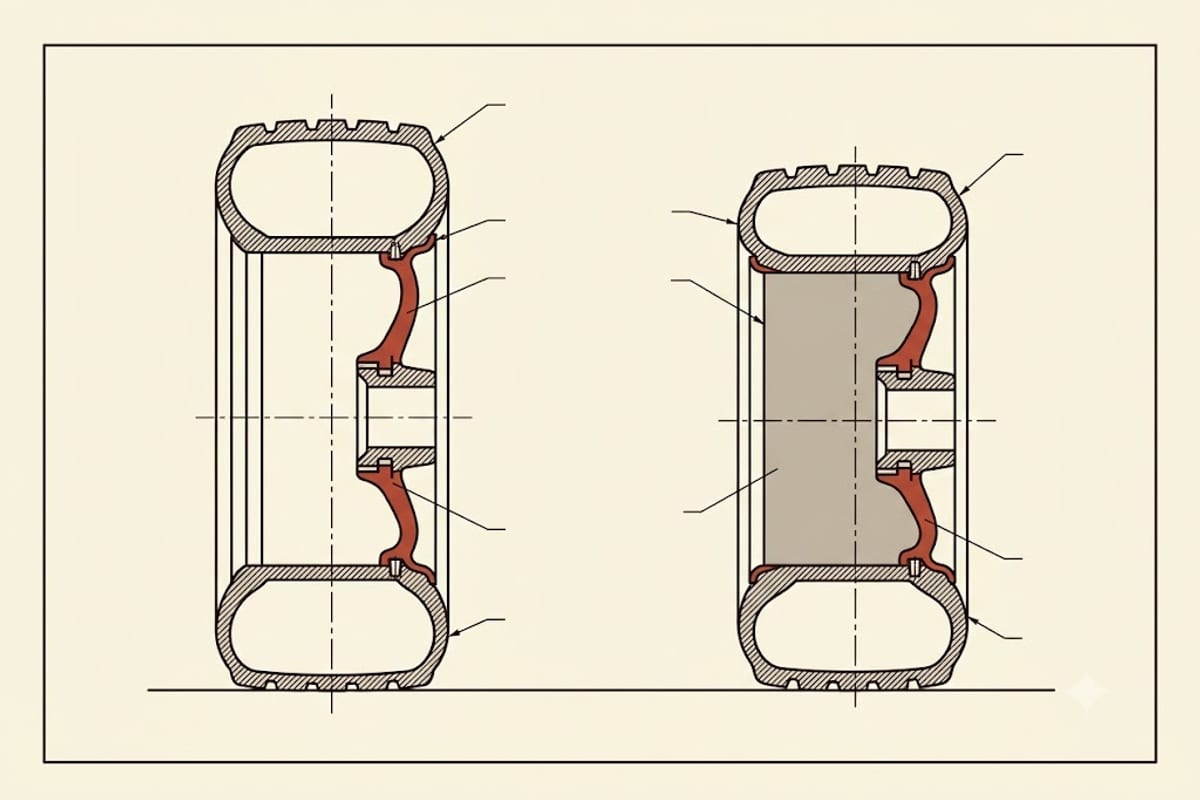
This produces a result people find surprising: going wider makes a tire taller unless you drop the aspect ratio to compensate. A 285/70R17 is not just wider than a 265/70R17, it is 1.1 inches taller, because 70 % of 285 is more than 70 % of 265. If you want more width at the same height you have to move the aspect ratio down, which is precisely what "plus sizing" means.
Compare 255/80R17 and 315/70R17. The second is 60 mm wider and has a lower aspect ratio, and it is still 1.3 inches taller — because 70 % of a much bigger number beats 80 % of a smaller one.
Speedometer error
Your speedometer measures wheel rotations and multiplies by an assumed circumference. Change the tire and that assumption is wrong by exactly the ratio of the diameters.
indicated speed × (new diameter ÷ old diameter) = true speed
From a factory 265/70R17 at 31.61″:
| New size | Diameter | Error | At an indicated 60 mph |
|---|---|---|---|
| 275/70R17 | 32.16″ | +1.7 % | true 61.0 mph |
| 265/75R17 | 32.65″ | +3.3 % | true 62.0 mph |
| 285/70R17 | 32.71″ | +3.5 % | true 62.1 mph |
| 255/80R17 | 33.06″ | +4.6 % | true 62.8 mph |
| 315/70R17 | 34.36″ | +8.7 % | true 65.2 mph |
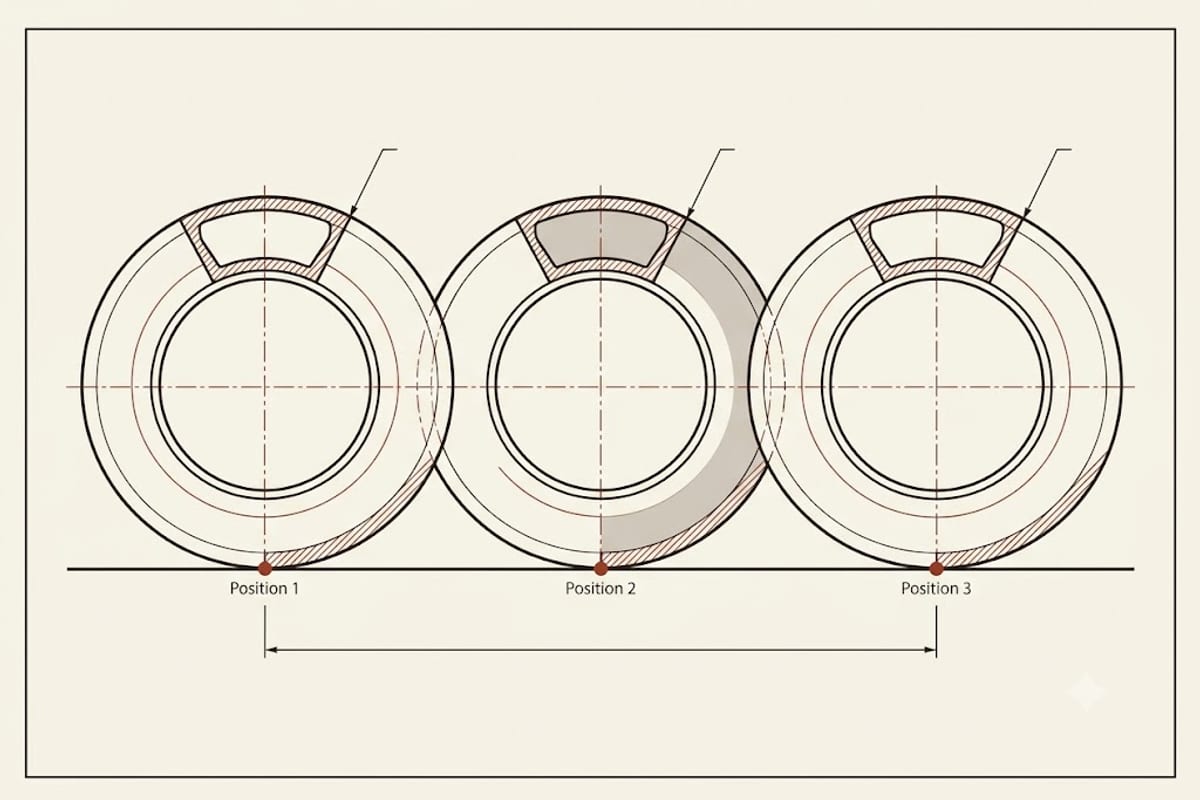
Three things follow, and the third is the one that costs money.
The error is always in the dangerous direction when you go bigger. A larger tire covers more ground per revolution, so you are travelling faster than the dial says. The 315 setup is doing 65 when it reads 60.
Your odometer is wrong by the same percentage. At +8.7 %, a hundred indicated miles is 108.7 actual miles. Over a year that is a meaningful gap in service intervals, and it quietly understates your mileage on anything where mileage matters.
Under about 3 % most people never notice, which is why factory option tires across a model range are usually within that band of each other. Above it, recalibration is worth doing.
Fitment is a different question from diameter
Diameter tells you whether a tire will rub at full lock and over bumps. It does not tell you whether the tire fits the wheel or sits where the fender expects.
- Wheel width has to suit the tire. Every tire size has a range of rim widths it is approved for and a measuring rim it was specified on. Mount it too narrow and the tread crowns; too wide and the sidewall is stretched and vulnerable at the bead.
- Offset moves the tire, not just the wheel. Reducing offset pushes the whole assembly outboard toward the fender, which is why two people fitting the same tire size get different rubbing results.
- Clearance is dynamic. The gap at rest is not the gap at full compression with the wheel turned. Suspension travel and steering lock both eat into it, and they combine on a turn into a driveway.
Load index and speed rating are not optional
The characters after the size — 265/70R17 115T — are load index and speed rating, and they are the part of the sidewall that is a safety specification rather than a dimension.
Load index is a coded maximum load per tire. Speed rating is the maximum sustained speed the construction is certified for. Fitting a tire with a lower load index than the vehicle's placard calls for is a genuine hazard on a loaded vehicle, and it is easy to do accidentally when chasing a size, because a wider tire in a cheaper range can carry a lower rating than the narrower one it replaced.
The vehicle's tire placard, not the old tire, is the reference. The placard states the minimum load index and the correct inflation pressures for the vehicle as built. The Tire Industry Association and your vehicle manufacturer are the authorities here — not a size calculator, this one included.
What this page does not cover
- Nothing here is a fitment approval. Diameter arithmetic tells you what a tire measures, not whether it is safe or legal on your vehicle. Load index, speed rating, rim width range and vehicle placard pressures all have to be satisfied independently.
- Flotation sizes (35×12.50R17 and similar) state overall diameter directly in inches and need no conversion — the arithmetic here is for the metric format only.
- Real diameters vary from the calculated one by a few tenths, because tread pattern and manufacturing differences mean the moulded size is nominal. Manufacturer specification sheets publish measured diameters.
- Gearing — a taller tire raises the effective final drive ratio, which affects acceleration, towing and transmission behaviour. That is a separate calculation from the speedometer error, even though both come from the same diameter change.
Three numbers on a sidewall, one of them a percentage. Almost everything confusing about tire sizing comes from that one detail.
Read next
- What Is a 33-Inch Tire in Metric? Seven Answers, Ranked — Seven common metric sizes get called 33s.
- Reading a Tire Sidewall: Every Marking, in Order — The size is the part everyone reads.
- Metric to Inches Tire Size: Both Directions, Worked — Metric to inches is arithmetic with one answer.
- Comparing Two Tire Sizes: The Four Numbers That Change — Comparing sizes by diameter alone hides the change that most often causes the problem.